It was also a year of COP in Brazil, a review of five years since the revision of the Marco Legal – Legal Framework, and a water crisis in São Paulo, among other challenges and opportunities.
18 Dec 2025
“The issue is not whether we can afford to invest in water and sanitation, but rather whether we can afford not to,” Portuguese jurist Catarina de Albuquerque once said. Her death in October 2025, at the age of fifty-five, was an immense loss. Her legacy and the impact of her work remain more alive than ever.
A point of reference for Instituto Água e Saneamento - IAS (in English: Water and Sanitation Institute - IAS), Catarina devoted her life to the cause of the human rights to water and sanitation. She was the first UN Special Rapporteur for DHAES (in English: Human Rights to Water and Sanitation). Catarina’s work inspired movements and organizations around the world, including IAS.
During her mandate, in July 2010, the United Nations established DHAES with the aim of ensuring access to water and sanitation services for all people, without discrimination. In 2018, she was appointed President of Sanitation and Water for All - SWA, a global multi-stakeholder partnership coordinated by the United Nations, of which IAS has been a member since 2023.
Access to water and sanitation services is far more than a set of services or infrastructure assets — it is an essential component in ensuring public health, human dignity, and environmental protection. In many respects, they are indispensable, echoing Catarina’s line of reasoning.
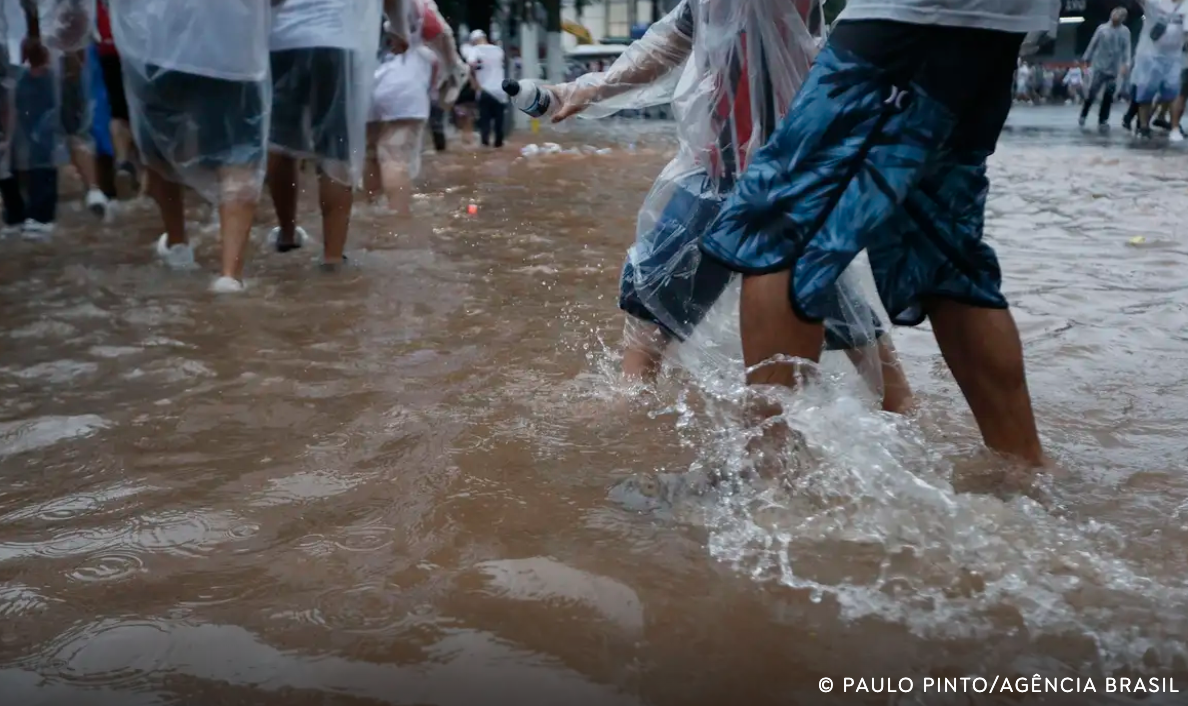
In 2025, IAS increasingly sought to shed light on the importance of water and sanitation in the context of climate change — an agenda that asserts itself with each new episode of urban flooding and with each new drought scenario that restricts a community’s water resources.
It was also a year marked by COP in Brazil, by taking stock of five years since the revision of the Legal Framework, and by a water crisis in São Paulo — alongside other challenges and opportunities.
In 2026, we remain committed to our purpose of sharing knowledge and fostering debate in support of the universalization of sanitation. We thank everyone who shares with us the desire and dedication to ensure that more families and communities see their lives improved through this right.
See below our 2025 highlights.
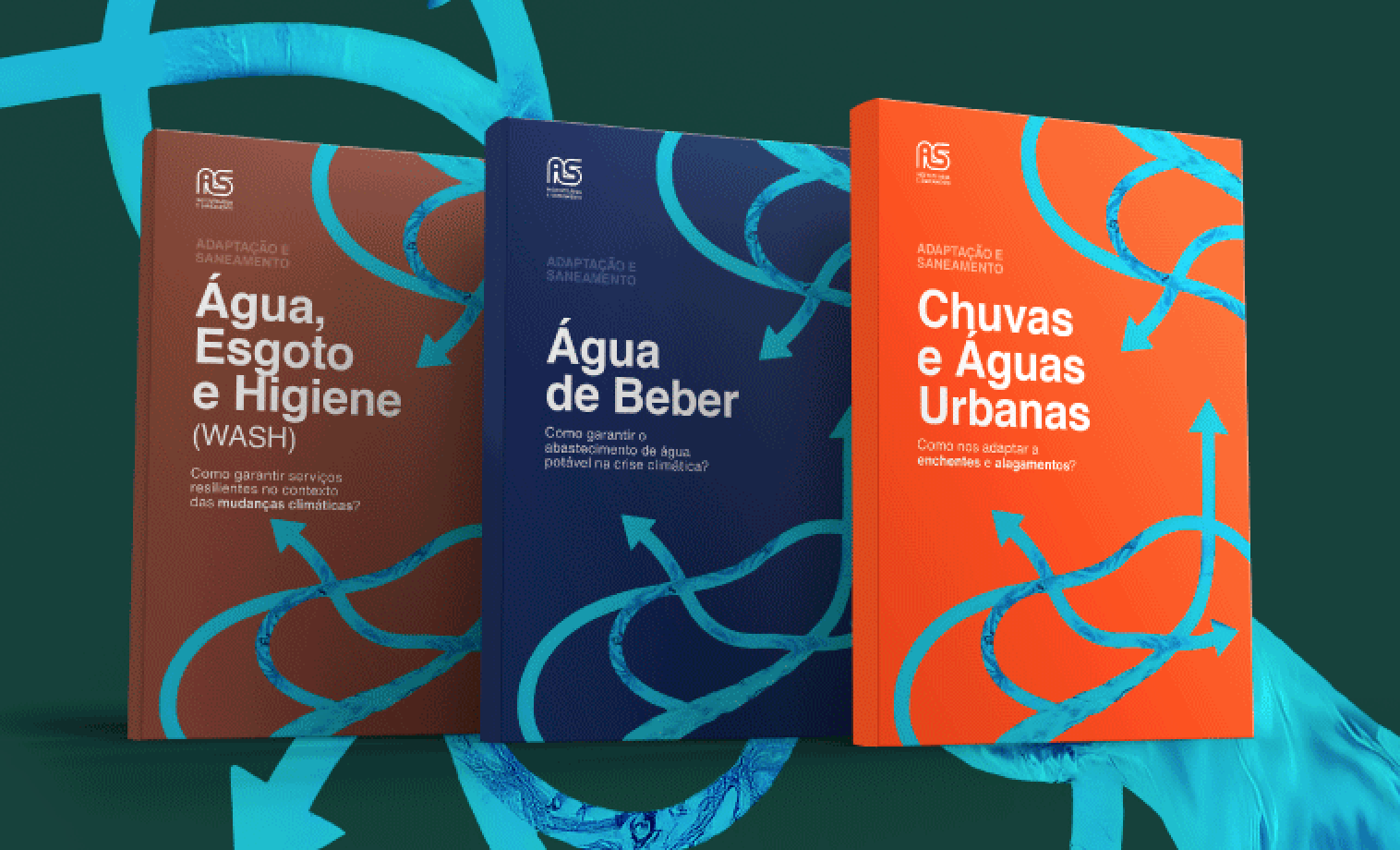
IAS released four publications focused on adaptation
In February, IAS released “Adaptação e Saneamento – Por um setor resiliente às mudanças climáticas” (in English: “Adaptation and Sanitation – toward a climate-resilient sector”), the institute’s first publication specifically focused on climate adaptation.
In December, three more publications were released, addressing other dimensions and challenges related to water and sanitation in the context of climate change. In “Chuvas e Águas Urbanas “(in English: “Rainfall and Urban Waters”), we look at urban drainage and stormwater management and how cities handle rainwater. In “Água de Beber” (in English: “Drinking Water”), we examine water quality alongside solutions such as programs for distributing cisterns and filters. Finally, “Water, Sanitation and Hygiene (WASH)” explores the links between sanitation, human dignity, and public health.
Federal Senate approves sanitation as a right
In April, the Senate established that basic sanitation should be a social right enshrined in the Brazilian Constitution. A Constitutional Amendment Proposal (PEC 2/2016) amended Article 6 of the Constitution, which sets out citizens’ social rights. As a result, sanitation is added to a list that already includes health, housing, and education.
The proposal was sent to the Chamber of Deputies, where it still needs to be reviewed by the Committee on Constitution and Justice and Citizenship (CCJC) and then by a Special Committee before it can be brought to the floor for a vote.

The Billings Reservoir turns 100
Created in 1925, the Billings Reservoir is the largest water reservoir in the São Paulo Metropolitan Region. The water body spans the municipalities of Santo André, São Bernardo do Campo, Diadema, Mauá, Ribeirão Pires, and Rio Grande da Serra, as well as the state capital. The reservoir suffers from pollution resulting from disorderly urban occupation in its surroundings.
On the occasion of the Billings anniversary, IAS took part in a debate on its centenary at Legislative Assembly of the State of São Paulo – Alesp, organized by the office of state representative Marina Helou of Sustainability Network (REDE), coordinator of the São Paulo Environmentalist Parliamentary Front. In her remarks, Marussia Whately, IAS’s executive director, noted that the Billings Reservoir is mentioned in the Constitution of the State of São Paulo (Article 46), perhaps a unique case of a reservoir being cited in a state constitution in Brazil.
Five years since the revision of the Sanitation Legal Framework
In July 2020, the National Congress passed a law that would significantly reshape Brazil’s sanitation sector. Law No. 14,026/2020, a revision of the 2007 legal framework (Law No. 11,445/2007), established universalization targets for 2033, defined new models for regional arrangements, and encouraged private-sector entry into the market for water supply and wastewater services.
With the new regionalized management models, responsibility for service provision began to be shared between states and municipalities, causing municipalities to lose their leading role. In addition, the expansion of concessions, privatizations, and PPPs (Public-Private Partnerships) has been changing the profile of service providers. On the other hand, these changes have not yet been reflected in service access indicators, raising uncertainty about meeting the 2033 targets: 99% of the population with safe drinking water and 90% with wastewater collection and treatment.
IAS and Ipea discuss the impacts and challenges of the Legal Framework
Marking five years since the 2020 change to the Legal Framework, IAS and Instituto de Pesquisa Econômica Aplicada - Ipea (in English: Institute for Applied Economic Research) held in July the seminar 5 Anos da Mudança no Marco Legal do Saneamento Básico: Perspectivas da Universalização? (in English: “5 Years Since the Change in the Basic Sanitation Legal Framework: Prospects for Universalization?”), streamed on YouTube.
The event featured an opening session and four panels with researchers and sector experts to discuss findings and challenges for universalizing access to water and wastewater services; an overview of policy and policy instruments in Brazil’s national basic sanitation policy; the new regional arrangements and public service provision models; and the perspective of bringing the basic sanitation agenda closer to the climate agenda.
IAS publishes The state of water and sanitation 2025
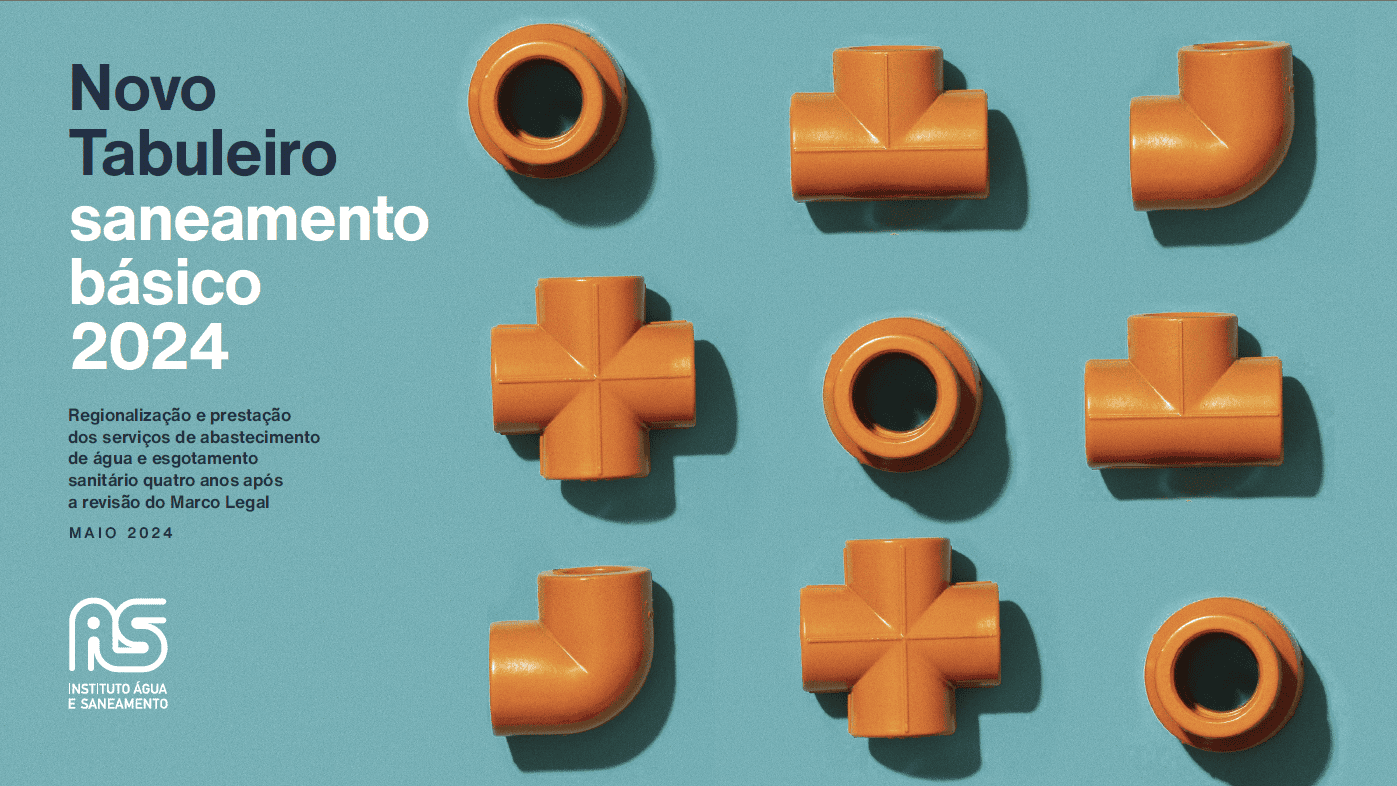
Also in July, IAS presented the 2025 edition of its publication “Tabuleiro do Saneamento Básico 2025” (in English: The state of water and sanitation 2025), an in-depth look at recent developments in Brazil’s national sanitation policy.
The publication includes chapters dedicated to indicators of access to water and sanitation, regionalization of water and wastewater service management, concessions, privatizations, and PPPs, the profile of service providers, and concludes with key points of attention and questions for the future.
Ten years on, the SDGs still have a long road ahead
Ten years after their adoption in 2015, the 17 Sustainable Development Goals (SDGs) remain a distant reality. With only five years left until the 2030 deadline, the UN states that the pace of change is not sufficient for the goals to be achieved, including commitments such as eradicating poverty, reducing inequalities, and ensuring access to safe drinking water and sanitation.
In its The Sustainable Development Goals Report 2025, released in July, the UN highlighted multiple advances worldwide in areas such as access to education and improvements in maternal and child health, but notes that “progress has been fragile and unequal.” Regarding SDG 6 (water and sanitation), the UN stated that despite “steady progress” in expanding global access to water, sanitation, and hygiene (WASH) services between 2015 and 2024, billions of people still face deprivations in relation to these basic services.
Water crisis and increased withdrawals from water sources
In September, the Cantareira System, which supplies Greater São Paulo, entered Band 3 – Alert after its usable volume fell to around 35% (by December, it would drop to nearly 20%). With the decline, Sabesp announced pressure-reduction measures in August and September, the second lasting 10 hours per day. On October 24, the Government of the State of São Paulo launched a water contingency plan that provides for pressure restrictions of up to 16 hours per day and the possibility of rotational supply in the São Paulo Metropolitan area (RMSP, its Portuguese acronym).
It was in this context that IAS released the report “O aumento da retirada de água dos mananciais da RMSP” (in English: The increase in water withdrawals from RMSP water sources), revealing that Sabesp’s withdrawals from the reservoirs that supply the region reached a record in 2025. The situation deserves special attention due to its impact on the recovery of a system whose volume has been declining during the dry season. The report received wide media coverage, including Folha de S.Paulo, CBN, G1, TV Globo, and BandNews.
Read more here and here.
IAS at the first COP held in Brazil
The importance and symbolism of COP30, hosted for the first time in Brazil in an Amazonian city, were immense. The event held in Belém was also notable for the total of 56,000 registered participants, the second-largest COP in history by that metric. It was also the first COP held in a democratic country since 2021, with broad participation from civil society and social movements.
For the first time, IAS took part in the conference, sending two representatives: Paula Pollini, coordinator for articulation and advocacy; and Eduardo Caetano, coordinator for knowledge and dissemination. The Institute’s experts participated in panels where different perspectives on the convergence between water, sanitation, and climate were discussed.
Water was a significant theme at the event, starting with the presence of the Water for Climate Pavilion inside the Blue Zone, the conference area where official negotiations, the Leaders Summit, and national pavilions took place. In that space, more than ninety organizations discussed topics such as water security and climate adaptation.
Read more here and here
Actions amplify World Toilet Day
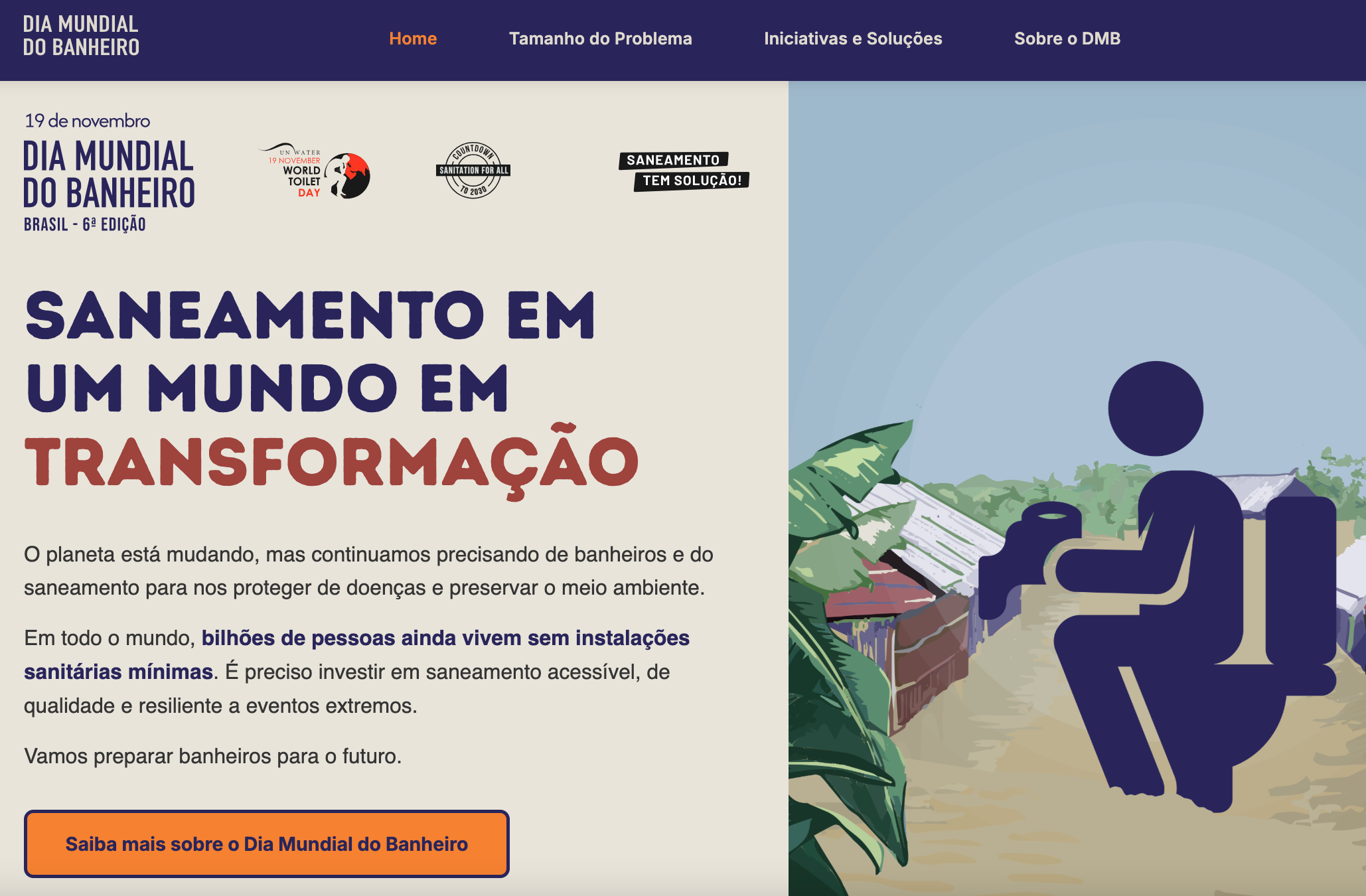
On November 19, IAS promoted, together with partners, the sixth edition of World Toilet Day Brazil. In 2025, the initiative aimed to raise the profile of the date and amplify agendas related to sanitation and its impact on people’s lives—on social media and also by leveraging the opportunity of the Institute’s presence at COP30, in Belém.
In partnership with the “artivist” Mundano, we produced stickers with sanitation-related messages, which were placed in bathrooms across conference venues, in collaboration with the Mairi Collective. Also, within COP30, IAS reinforced the importance of World Toilet Day and its message in the panel “Sanitation for those who don’t have it: Brazil without bathrooms.” We also launched a a special website featuring data that reveal different aspects of Brazil’s sanitation deficit and initiatives aimed at addressing gaps in the sector, recorded in videos from the web series Sanitation Has a Solution.
New episodes of the Solutions Web series
As part of our purpose of promoting community-based solutions to sanitation gaps, we released three new episodes of our web series “Saneamento tem Solução! Série Projetos e Iniciativas” (in English: “Sanitation Has a Solution! Projects and Initiatives Series”).
In southern Bahia, the Inclusive Sanitation initiative organized a local capacity-building effort to address sanitation issues, leading to a series of structural and action-oriented measures. In the Federal District, the “Flores na Escola” project (in English: “Flowers at School”) transformed the girls’ restroom into a space of support and welcome for students, providing sanitary pads and messages aimed at boosting students’ self-esteem. In Rio de Janeiro, the community-based work supported by Maré Community Networks strengthened a legal action that recognized the community’s right to basic sanitation.
Read more
Share
Topics
IAS Newsletter
Subscribe to our newsletter to receive the latest news on sanitation and updates from IAS.
Initiatives
Discover IAS initiatives that aim
to inspire change in the sanitation sector

Municipalities and Sanitation
Access the latest data on sanitation in Brazilian municipalities.

World Toilet Day
Every year, we promote actions to raise awareness about the importance of access to proper toilets and hygiene.

Water and Sanitation Forum
This is a permanent space for dialogue and idea exchange among various social actors connected to the sanitation sector and its cross-cutting themes.